
Commercial floor scrubbers are a significant investment for any facility, warehouse, retail store, healthcare facility, or educational institution. Proper daily maintenance helps maximize equipment life, reduce downtime, improve cleaning performance, and lower repair costs. Whether you operate a walk-behind scrubber or a ride-on machine, following a daily maintenance checklist ensures your equipment remains in peak operating condition.
Inspect and Clean Recovery Tanks
One of the most important daily tasks is emptying and rinsing the recovery tank after each use. Dirty water left inside the tank can create odors, promote bacteria growth, and cause buildup that may affect machine performance. Thoroughly rinse the tank and inspect the shut-off float screen to ensure it is free from debris and functioning properly.
Empty and Rinse the Solution Tank
If your facility uses cleaning chemicals, residue can accumulate inside the solution tank over time. Drain any remaining solution and rinse the tank with clean water. This helps prevent chemical buildup that can clog filters, hoses, and dispensing systems.
Check Squeegees for Wear
The squeegee assembly plays a critical role in water recovery. Inspect front and rear squeegee blades daily for cuts, tears, uneven wear, or embedded debris. Damaged squeegees can leave streaks and water behind, creating slip hazards and reducing cleaning effectiveness. Rotate or replace worn blades as needed.
Inspect Brushes and Pad Drivers
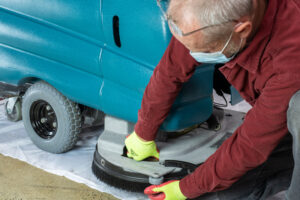
Examine scrub brushes or floor pads for excessive wear and debris accumulation. Worn brushes can reduce cleaning performance and place additional strain on the machine’s motors. Remove string, plastic wrap, or other materials that may become wrapped around the brush assembly. Replace pads and brushes when they no longer provide effective cleaning.
Clean Filters and Screens
Many floor scrubbers contain solution filters, debris screens, and vacuum intake screens. These components should be inspected and cleaned daily to maintain proper water flow and suction performance. Clogged filters can reduce cleaning efficiency and contribute to costly repairs.
Check Battery Condition
For battery-powered floor scrubbers, inspect batteries at the end of each shift. Look for loose cables, corrosion, or damaged connectors. Verify that batteries are properly charged using the manufacturer’s recommended charger. For flooded lead-acid batteries, check water levels according to manufacturer guidelines and refill with distilled water when necessary.
Inspect Hoses and Connections
Walk around the machine and inspect all visible hoses, fittings, and connections. Look for leaks, cracks, or signs of wear that could affect water delivery or vacuum performance. Catching small issues early can prevent major service calls later.
Wipe Down the Machine
A clean machine is easier to inspect and maintain. Wipe down exterior surfaces, control panels, and operator areas to remove dirt, chemical residue, and dust. Keeping the machine clean also presents a more professional appearance.
Document Issues Immediately
Train operators to report unusual noises, reduced cleaning performance, warning lights, or other concerns immediately. Addressing minor issues before they become major failures can significantly reduce downtime and repair expenses.
Protect Your Investment
A consistent daily maintenance routine takes only a few minutes but can add years to the life of your floor scrubber. By inspecting key components, cleaning tanks and filters, and monitoring battery health, facility managers can improve equipment reliability, maintain cleaner floors, and reduce overall operating costs.

0 Comments